
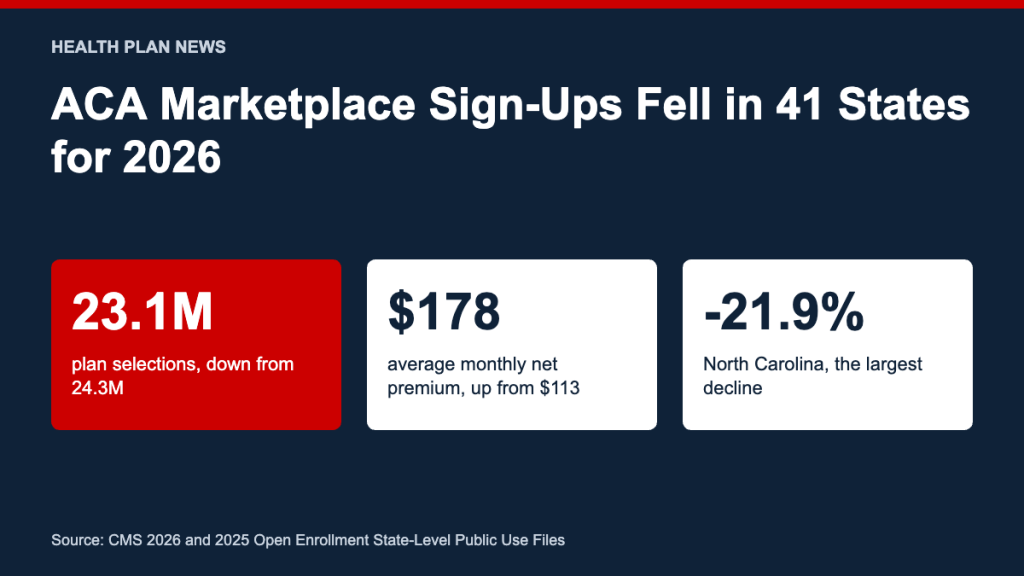
ACA Marketplace sign-ups fell in 41 states for 2026, with North Carolina down 21.9% and Ohio down 19.5%, according to final Open Enrollment data from the Centers for Medicare & Medicaid Services (CMS). Nationally, 23.1 million people picked a plan, about 1.2 million fewer than in 2025.
The drop followed the expiration of the expanded premium tax credits at the end of 2025. The average monthly premium enrollees paid after tax credits rose from $113 to $178. Health Plan News compiled every state’s numbers on a new reference page: ACA Marketplace Enrollment and Premiums by State.
If you kept a Marketplace plan this year, check the income estimate on your application. An outdated figure is the most common reason people pay more than they should.
Where Sign-Ups Fell and Where They Grew
After North Carolina and Ohio, the steepest declines came in West Virginia (16.7%), Indiana (16.5%) and Delaware (15.6%).
Ten markets bucked the trend. New Mexico led with an 18.1% gain, after it became the only state to fully replace the lost federal tax credits with its own money. State economists have since warned that the fund paying for it could run short within a few years, so New Mexico enrollees should not count on that help lasting indefinitely. The District of Columbia rose 7.5%, and Texas grew 5.2% to 4.17 million plan selections.
Florida remains the largest Marketplace by far, with 4.54 million sign-ups. Texas, California, Georgia and North Carolina round out the top five.
Who Dropped Coverage
The expanded credits, in place from 2021 through 2025, had two big effects. They extended help to people earning more than 400% of the federal poverty level (FPL), about $62,600 for a single person in 2025, and they made many plans free for lower-income enrollees.
Both groups felt the change. KFF’s analysis found sign-ups above 400% FPL fell 44%, and young adults ages 18 to 34 accounted for nearly half of the national decline.
The 23.1 million figure probably overstates coverage.
A plan selection is not a paid policy, and KFF estimates average paid enrollment could fall to about 17.5 million this year, from 22.3 million in 2025. Some people signed up, saw the first bill and walked away.
Cheaper Premiums, Bigger Deductibles
Many people who stayed traded down. Bronze plans rose from 30% to 40% of selections, and the average deductible climbed 37%, to $3,786. A bronze plan with a $0 premium looks like a bargain until a hospital visit lands in January.
The full, unsubsidized premium also rose, from an average of $619 a month to $741. People who pay full price, including many early retirees and self-employed workers, absorbed that increase directly.
What To Do Next
- Report income changes to the Marketplace right away, since a lower estimate can raise your tax credit.
- Compare silver plans with cost-sharing reductions against bronze before renewing for 2027.
- Check Medicaid eligibility if your income dropped.
- Use a special enrollment period after a job loss, move or new baby.
- Ask a free Marketplace navigator for help comparing plans.
Insurer participation matters too. Our claim denial rankings show how often each HealthCare.gov insurer turns down claims, a useful check before you pick a carrier for 2027. For premium filings and Open Enrollment coverage, follow our Health Insurance Coverage hub.