
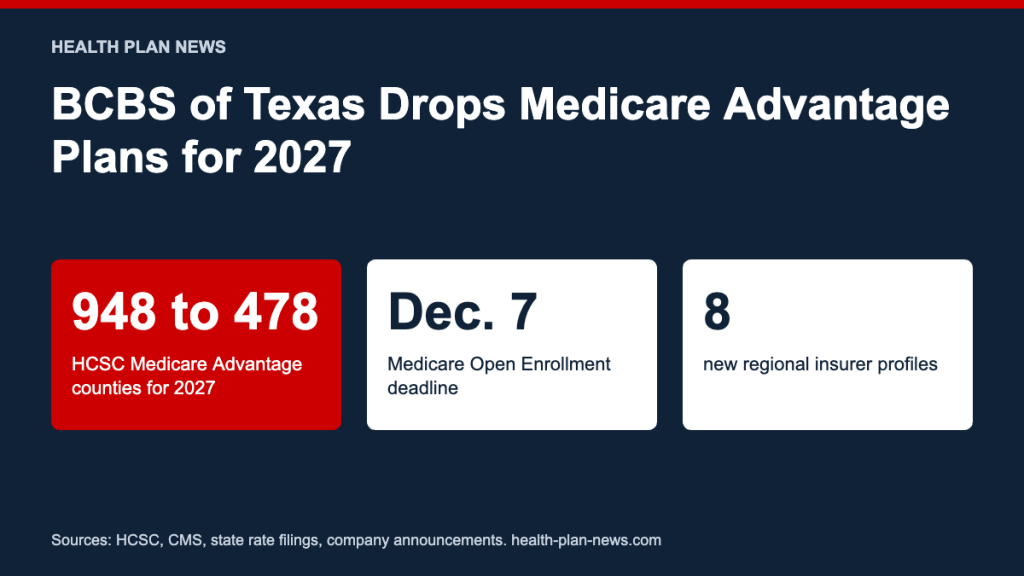
Blue Cross and Blue Shield of Texas is ending its individual Medicare Advantage, Part D drug and dual-eligible plans on January 1, 2027, leaving its members to pick new coverage before Medicare Open Enrollment closes December 7. Its parent, Health Care Service Corp., is cutting its Medicare Advantage footprint from 948 counties to 478.
Texas is not alone. Regional Blue Cross plans and health-system insurers are reshaping their 2027 coverage, from network fights in Virginia and Philadelphia to star rating drops in Florida. Health Plan News has published new profiles of eight regional brands, starting with Blue Cross and Blue Shield of Texas.
If you have a BCBSTX Medicare plan, do not wait for the deadline. Compare plans on Medicare Plan Finder now, and check whether your doctors are in each network.
What Is Changing in Texas
BCBSTX remains the dominant commercial insurer in Texas, with 45% of the market, and its Marketplace and employer plans continue. The Medicare exit follows a $1.9 billion loss at HCSC in 2025, much of it tied to the Medicare business it bought from Cigna. HCSC will keep some Medicare Advantage plans in Texas under the HealthSpring brand.
Members losing a plan get a special enrollment period, and many also gain a guaranteed right to buy a Medigap policy. Our Medigap vs Medicare Advantage guide explains that choice.
Other Regional Changes for 2027
- Virginia: Sentara Health Plans ended talks with Anthem in October over Medicare Advantage, Medicaid and ACA plans, affecting about 215,000 Hampton Roads members.
- Philadelphia: Jefferson Health’s commercial contract with Independence Blue Cross expires December 31, and Jefferson has sued IBX over reduced payments.
- Florida: Florida Blue’s Medicare Advantage contracts each lost a half star for 2027, and its PPO individual rates rise 18.8%.
- Utah: Select Health holds its 2027 individual rate increase to an average 5.96%.
- Michigan: Priority Health expands its dual-eligible plan to more regions.
Two more profiles cover brands many people misunderstand. UMR is UnitedHealthcare’s administrator for self-funded employer plans, not an insurer, and AARP Medicare plans are insured by UnitedHealthcare, which paid AARP about $9 billion in 2024 to extend the licensing deal.
What To Do Next
- Open any 2027 plan notice from your insurer.
- Check your hospital’s network status if your system is in a contract dispute.
- Compare star ratings and out-of-pocket limits before switching.
- Review insurer claim records in our claim denial rankings.
For the national carriers, see our profiles of the eight largest health insurers, and follow our Medicare hub through Open Enrollment.